
Distributed arrivals and departures
Guests, delegations, speakers and executives can reach the destination via different airports, FBOs, times and origins, with subsequent programmes that do not necessarily coincide.
EVENT MOBILITY · MICE · GUEST & DELEGATION COORDINATION
When an event involves guests, delegations, executives, speakers, sponsors, airports, hotels, venues and multiple operators, mobility becomes an integral part of the programme.
Arrivals, departures and movements must remain consistent with the Run of Show, guest programme, hospitality, access, corporate activities and different moments of the event.
Havermond structures and coordinates Event Mobility Programs through Strategic Mobility Planning, Guest & Delegate Movement Planning, Ground Transportation Management, On-Site Coordination and Operational Continuity.
The company does not act as an event agency, PCO, DMC or transportation provider.
The mandate concerns the governance of the Mobility component and the coordination of its interdependencies with the overall event programme.
Havermond can operate in conjunction with agencies, PCOs, DMCs, corporate event teams, production companies, hospitality partners and venues, reducing the coordination burden on the structures already responsible for the event.

It's not about coordinating a sum of movements. It's about structuring guest movement in relation to the overall event programme.
02

Complexity does not depend solely on the number of participants.
It can arise from the relationship between different categories of guests, multiple locations, time windows, operators and activities that must remain coordinated.
Guests, delegations, speakers and executives can reach the destination via different airports, FBOs, times and origins, with subsequent programmes that do not necessarily coincide.
Executives, delegates, speakers, sponsors and VIP guests may require different priority levels, itineraries and coordination methods.
Hotels, conference venues, corporate offices, dinner locations and additional spaces can generate parallel or consecutive movement programmes.
Certain moments of the programme may concentrate arrivals, departures or transfers between venues within limited operational windows.
Changes to the Run of Show, variations in arrivals, agenda changes or guest-related updates can simultaneously impact multiple components.
03
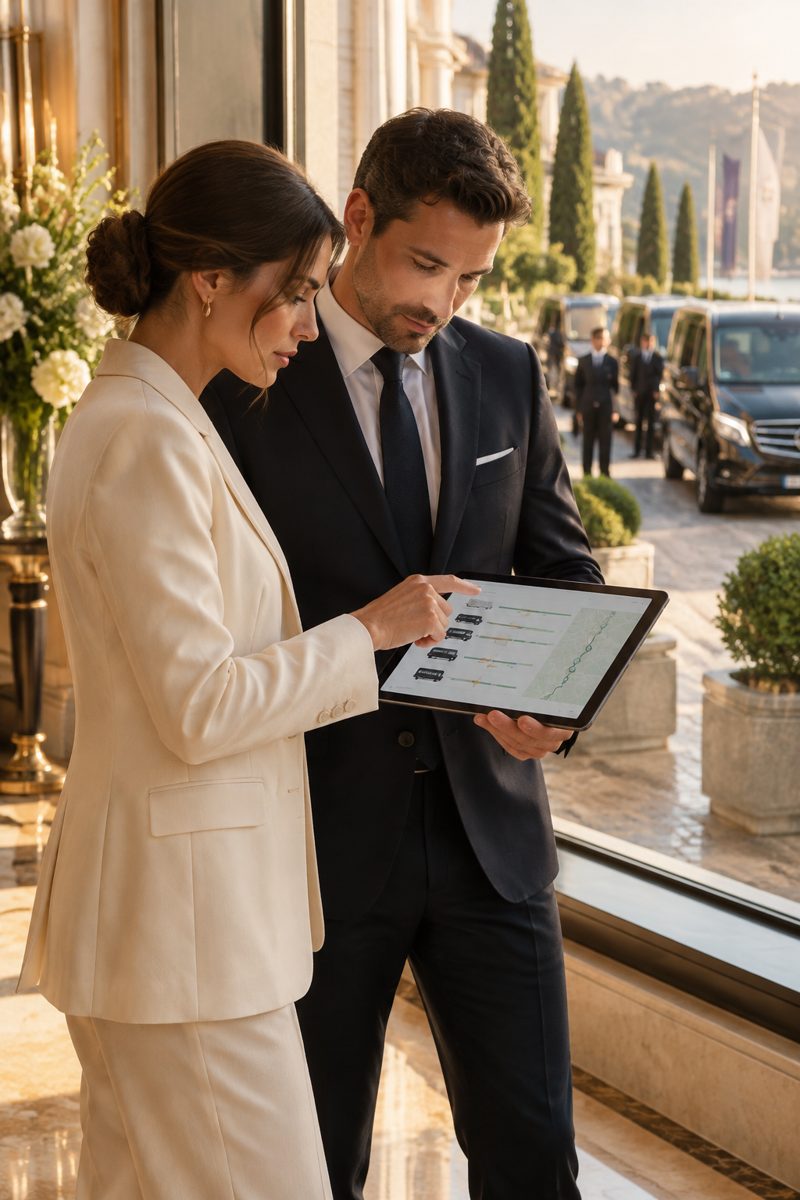
Event Mobility Management does not simply introduce an additional organisational layer.
It reduces fragmentation between the event programme and the movement of involved individuals.
Run of Show, guest movements, hospitality, providers, and locations are interpreted within the same programme.
The structures responsible for the event do not have to directly realign each operator with every change.
Arrivals, departures, and transfers remain linked to the planned activities for different guest profiles.
A variation is evaluated against the consequences it may produce on other components of Mobility.
04

The starting point is the event programme.
Havermond analyses its agenda, guests, locations, responsibilities, and main dependencies, translating them into a coordinated mobility structure.
Run of Show, arrivals, departures, hospitality programme, hotels, venues, and collateral activities are interpreted as components of the same operational programme.
Planning can consider:
The Movement Plan is then built based on the event's needs, not merely on vehicle availability.
Information regarding guests, delegates, speakers, and executives is linked to the activities each group needs to perform.
The framework can distinguish:
Executive & VIP Movement for CEOs, boards, senior executives, and representative guests;
Delegate Transportation for congresses, conventions, summits, and institutional programmes;
Attendee Movement for participants in meetings, conferences, incentives, and exhibitions;
Speaker Movement coordinated with sessions, venues, hospitality, and subsequent activities.
The various requirements are integrated into the same Event Mobility Program, preserving the specificities of each profile.
Havermond can coordinate different operators and structures already selected by the client or organisation, maintaining a single operational overview and preserving the distinction of their respective responsibilities.
Any requirements related to Vehicle Allocation or resource configuration remain entrusted to the competent operational structures and are considered in relation to the overall programme.
In-depth management of the ground component is developed within the Ground Transportation Management area.
For more complex programmes, an operational presence may be provided during the event.
On-Site Coordination maintains the link between the Movement Plan and execution, allowing the Mobility component to be updated in response to programme variations.
The presence may include:

05
In complex events, the true subject of planning is not the vehicles.
It is the people and how they need to move through the programme.
A participant might follow:
Airport → Hotel → Conference → Dinner → Hotel → Airport
A speaker:
Airport → Hotel → Venue → Hospitality Program → Departure
An executive:
FBO → Hotel → Corporate Meeting → Event → Private Dinner → FBO
Guest Movement Planning connects these routes to planned activities and available information.
The framework can consider, where relevant:
The objective is to prevent each movement from being treated as an independent process.
06

Meetings, congresses, conventions, incentives, and exhibitions may require a mobility model capable of maintaining continuity between guests, hospitality, programme, and different locations.
Complexity can arise from the simultaneous presence of multiple conditions.
Distributed Arrivals and Departures
Delegates, speakers, and executives may reach the destination via different airports, FBOs, times, and origins, requiring a coherent relationship between travel information and the programme at the destination.
Multiple Hospitality Structures
Guests distributed across different hotels must be able to reach venues and planned activities while maintaining consistency with the Guest Movement Plan.
Parallel Programmes
Sessions, meetings, hospitality programmes, and dedicated appointments can generate different itineraries for various categories of participants.
Multi-Venue Programmes
Conference venue, hotel, dinner location, and additional spaces can be integrated into a single Movement Plan, maintaining continuity between the different phases.
Executive, Speaker & Delegate Programmes
Executives, speakers, and delegations may require specific coordination methods, maintained however within the same operational framework.
The framework can support programmes such as:
Havermond oversees Mobility Governance, working in conjunction with PCOs, DMCs, agencies, and organisations already responsible for the MICE programme.
07
The complexity of an Event Mobility Program can also stem from the profile of the stakeholders, the level of representation, or the event's exposure, regardless of the total number of participants.
Conventions, leadership summits, stakeholder meetings, delegations, and corporate programmes where executives and guests must move according to a structured agenda.
Product launches, press events, brand activations, and hospitality programmes where management, sponsors, partners, buyers, and guests may follow different itineraries.
Large-scale events, Fashion Weeks, industry programmes, and other contexts characterised by multiple stakeholders, venues, guest categories, and operational variations.
In all these scenarios, Havermond does not assume creative or production responsibility for the event.
08

Some programmes require Mobility coordination to continue directly during execution.
On-Site Coordination becomes particularly relevant when the number of locations, guest categories, involved operators, or frequency of variations increases.
On-site presence can maintain liaison between:
for Run of Show variations and programme updates;
for access points and main Mobility connection points;
for updates related to resources and operational sequence;
for changes affecting the Movement Plan;
when specific protocols alter the modalities or timings of movements.
The objective is to maintain a continuous relationship between Event Transportation Planning and execution, reducing information fragmentation at the moment of peak operational intensity.
09
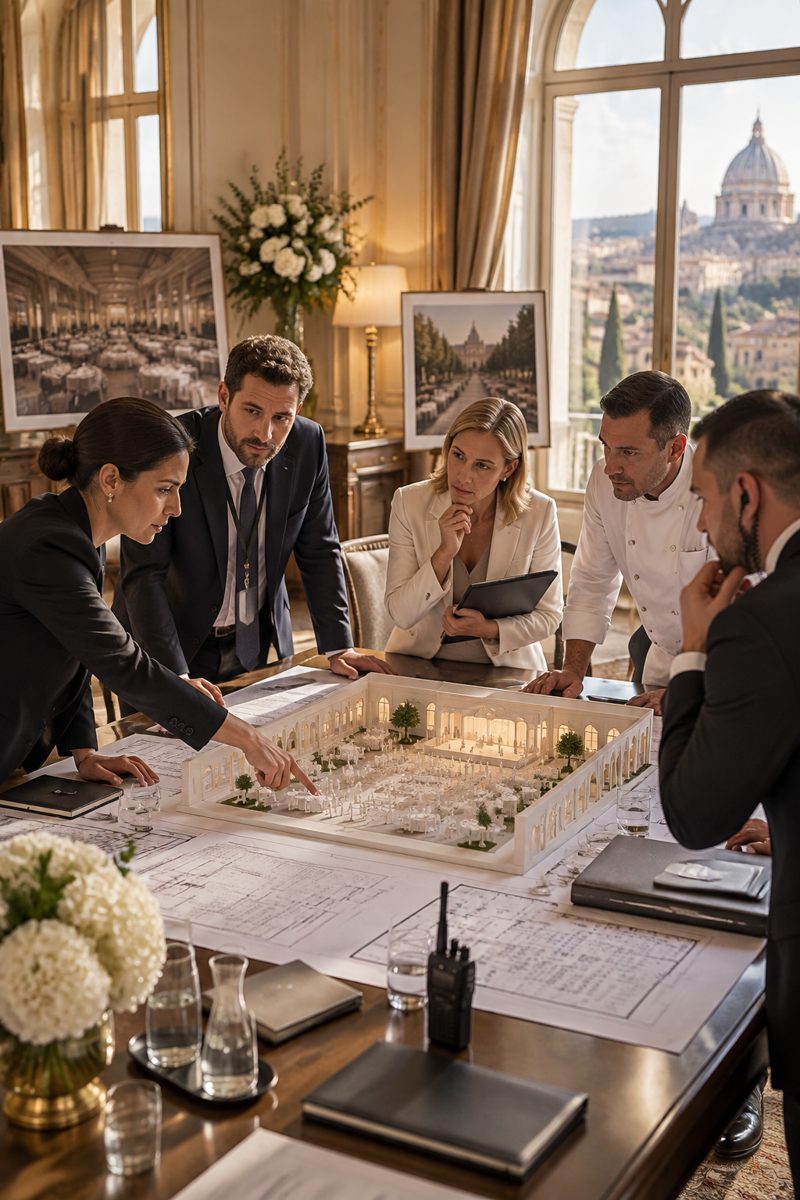
Havermond can operate in conjunction with agencies, PCOs, DMCs, production companies, corporate event teams, hospitality partners, venues, and security already involved in the programme.
The conferment of the mandate does not require the replacement of existing structures.
Havermond assumes the level of Event Mobility Management and Operational Coordination necessary to keep the Mobility component consistent with the programme defined by other parties.
Respective competencies and responsibilities remain distinct.
A single point of Mobility oversight within a broader professional ecosystem.
10
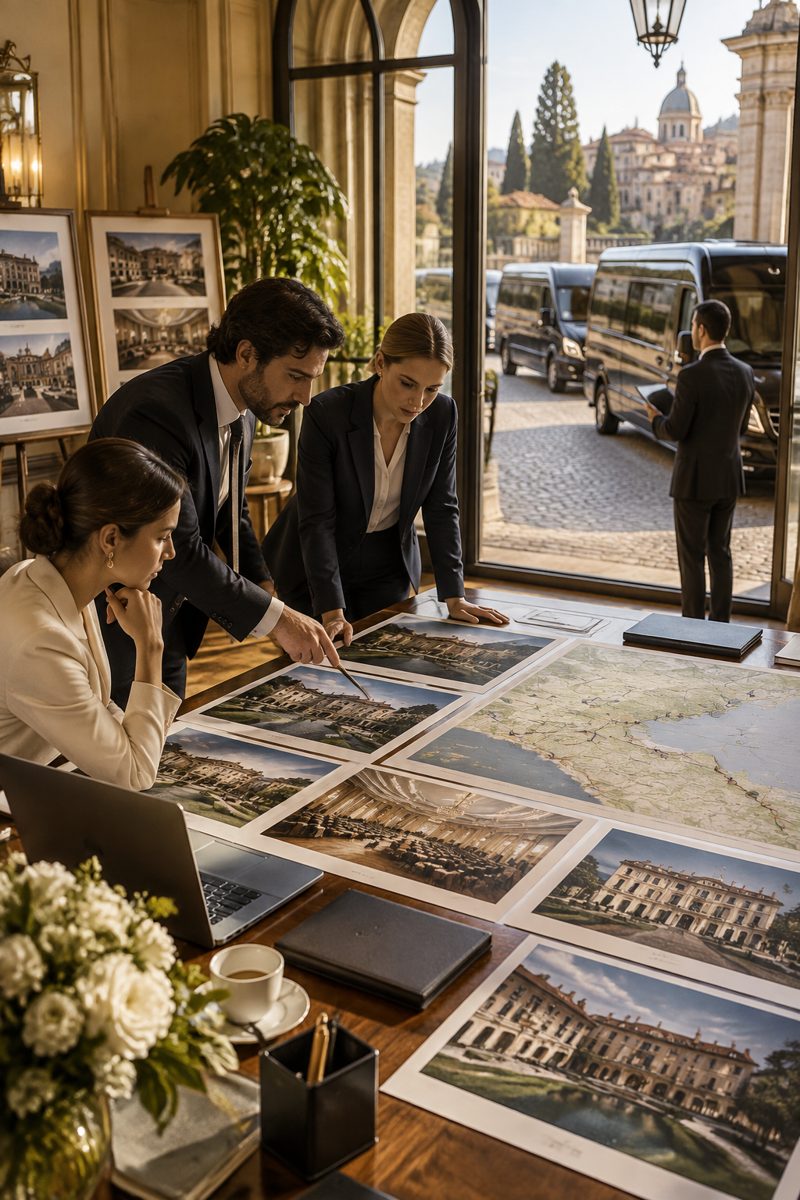
When the programme spans multiple venues, days, cities, or countries, information, operators, and the Guest Movement Plan must maintain continuity between one phase and the next.
Havermond can bring these components into a single coordination framework, maintaining the relationship between the event programme and Mobility even when execution is distributed across multiple territories.

11
Arrival represents one of the first points where the event programme meets operational reality.
Commercial flights and private aviation can generate different modalities and timings for entry into the programme.
Havermond can coordinate the connection:
AVIATION INPUTS → AIRPORT / FBO INTERFACE → GROUND MOBILITY → EVENT PROGRAM
Relevant Aviation Inputs are processed with respect to their consequences on the Guest Movement Plan and planned activities at the destination.
Airport, aeronautical, and transport responsibilities remain entrusted to their respective competent parties.
12

An Event Mobility Program may involve guest information, executive agendas, locations, access, and specific organisational or protection requirements.
When required by the client or organisation, the framework can incorporate:
Event agencies, PCOs, DMCs, production companies and venues retain responsibility for their respective areas.
Ground Transportation operators retain responsibility for the execution of transport services.
Security and Executive Protection activities remain entrusted to authorised parties.
Havermond oversees the interdependencies of the Mobility component included in the mandate.
13
A change to the Run of Show, an alteration to arrivals, or a variation in the guest programme can simultaneously impact multiple movements.
Operational Continuity allows for the realignment of information, decisions, operators, and the Movement Plan with the new scenario.
The variation is then assessed for its consequences on the entire Event Mobility Program.
The programme may change. The relationship between the event and Mobility must remain governable.
14
Not every event requires a structured Event Mobility Management model.
The need increases when different categories of guests, multiple airports, hotels, venues, providers, days, or mutually dependent movements are involved.
The preliminary assessment may consider:
When the Run of Show, venue, hotel, or an initial arrivals structure are already available, these elements allow for the identification of the main dependencies of the Mobility component.
From this analysis, the necessary level of Event Mobility Management and Operational Coordination is defined, along with the corresponding scope of the mandate. Havermond can integrate with agencies, PCOs, DMCs, production companies, and operators already selected.