
Responsibilities and decision-making levels
Roles, competencies, Decision Rights, and authorisation levels are kept distinct and transparent throughout the development of the operation.
MOBILITY · ASSET & PROPERTY · HOSPITALITY
Havermond is a strategic advisory firm that acts as a Strategic Advisor for private clients, Family Offices, Private Offices, companies, international groups, and organisations when multiple stakeholders, operators, locations, and responsibilities need to be brought under a single coordination framework.
The model integrates Strategic Advisory, Operational Coordination, and Operational Continuity to structure the mandate, coordinate the various components of the assignment, and maintain oversight throughout the entire development of the operation.


01
The same Strategic Advisory & Operational Coordination model is applied to three areas where a plurality of subjects, responsibilities, and activities require integrated management.

02
For companies, international groups, agencies, DMC, PCO, Family Offices, and organisations, Havermond coordinates complex mobility programmes, including corporate events and large-scale events, MICE, roadshows, delegations, executive programmes, multi-location, and multi-day, integrating ground transportation, hospitality, private aviation, and FBO coordination where necessary.

03
For private clients, Family Offices, Private Offices, investors, and asset professionals, the activity concerns Asset Origination, Asset Strategy, and coordination of operations related to real estate, properties, and real estate portfolios, integrating advisors, technical professionals, counterparties, and parties involved in the various phases of the assignment.
The approach considers the asset not only at the acquisition stage but also in terms of its potential for enhancement, repositioning, and development over time.

04
For investors, hotel groups, hotel owners, Family Offices, and hospitality operators, Havermond applies Strategic Advisory and Operational Coordination to Hospitality Assets, Hotel & Hospitality Operations, Guest Operations, and multi-location programmes.
The mandate may involve both the operational coordination of hospitality structures and programmes and the strategic analysis of assets intended for hospitality, from opportunity assessment to potential levers for repositioning and value creation.

05
When an assignment involves multiple stakeholders, operational structures, locations, and levels of responsibility, the correct management of individual activities does not automatically guarantee the coherence of the whole.
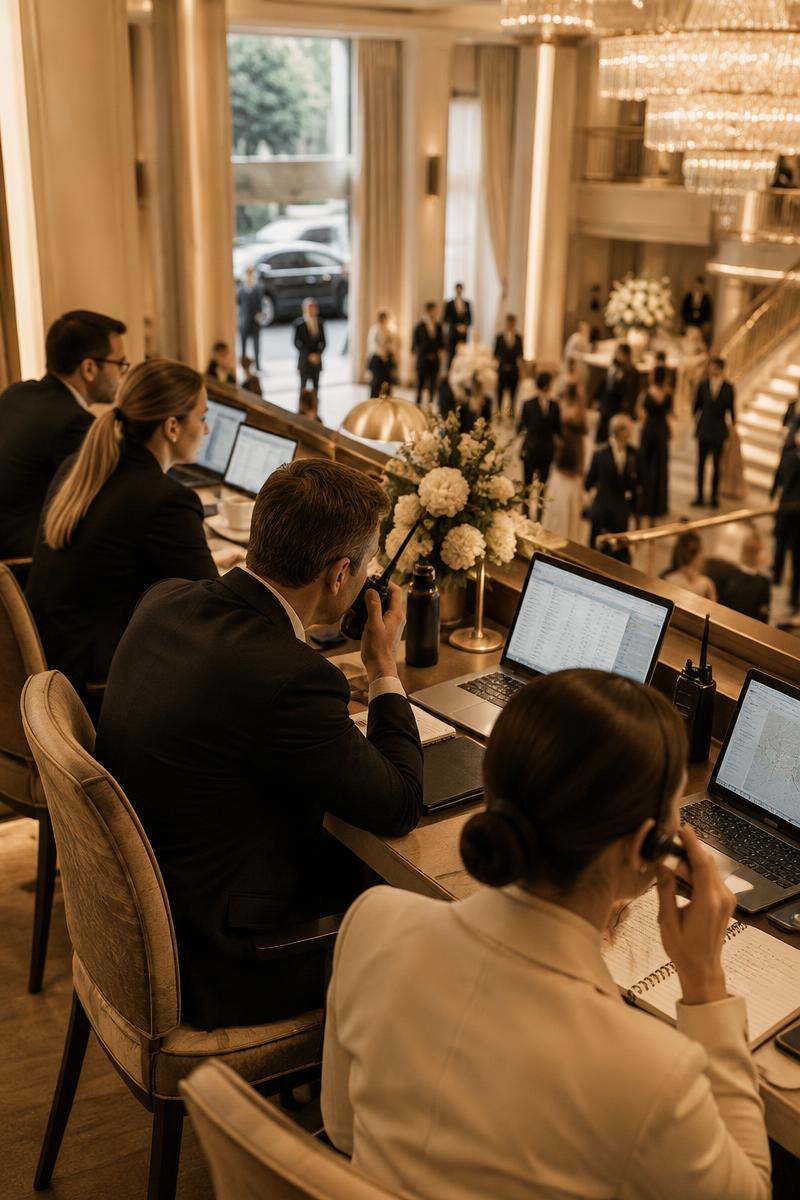
Operational Coordination oversees the relationships and interdependencies between the various components of the assignment, clarifying who is responsible for what, what information needs to circulate, and what decisions require coordination.
The mandate may include the governance of:
Roles, competencies, Decision Rights, and authorisation levels are kept distinct and transparent throughout the development of the operation.
Information, updates, and reporting are consolidated into a coherent framework, ensuring that each party has what is necessary for their role.
Professionals, operators, assets, locations, and activities remain autonomous within their respective competencies, but are coordinated with respect to the consequences each component may have on the others.
When the context changes, variations are assessed for their impact on the overall operation, coordinating necessary decisions, escalations, and realignments.
When stipulated by the mandate, Havermond can operate as a Single Point of Coordination for the components entrusted to its oversight, without superseding the specialist responsibilities of other involved parties.
06
Complexity does not necessarily stem from a single activity, but from the simultaneous interaction of multiple operational variables.
Multi-Location · Multi-Day · Multi-Stakeholder · Cross-Border · On-Site · Real-Time Changes
An international corporate event may require the simultaneous coordination of executive delegations and guests, accreditations and venue access, Mobility programmes, Hospitality, productions, sponsors, and institutional or corporate agendas.
An operation related to a property or a Hospitality Asset, on the other hand, may involve Asset Origination, real estate, legal, and tax advisors, technical and urbanistic due diligence, counterparties, Hospitality operators, and professionals tasked with evaluating the asset's potential, criticalities, and possible valorisation strategies.
In both cases, the need concerns the ability to manage the interdependencies between different activities and competencies, maintaining a single operational and decision-making framework.
07

The Havermond Method translates complex contexts into a Strategic Advisory & Operational Coordination structure capable of maintaining coherence between responsibilities, decisions, activities, and execution.
The process unfolds through five interconnected phases.
01 — Analysis
Understanding the context, scope, responsibilities, and main interdependencies characterising the operation.
02 — Planning
Defining the operational structure, priorities, decision-making levels, and coordination methods necessary for the assignment's development.
03 — Coordination
Stakeholders, operators, and competencies are brought together within a coherent Coordination Framework, while maintaining distinct roles and responsibilities.
04 — Execution
Havermond maintains Operational Oversight over the components included in the mandate, preserving visibility on progress, variations, and steps requiring coordination.
05 — Continuity
Information, decisions, responsibilities, and execution remain consistent even when the context evolves from the initial configuration.
ANALYSIS → PLANNING → COORDINATION → EXECUTION → CONTINUITY ↺
The five phases do not represent isolated activities: they can be reactivated and realigned during the operation's development, maintaining a unified vision of the assignment.
08

Havermond operates as a Strategic Advisor for clients, organisations, and professional structures that need to manage assignments characterised by multiple stakeholders, responsibilities, locations, and operational components.
The mandate can be conferred directly or integrated into existing arrangements, maintaining distinct roles, competencies, and responsibilities.
Havermond supports private clients, entrepreneurial families, Family Offices, and Private Offices in assignments where asset, hospitality, Mobility, and further operational components must be brought under a single coordination framework, working in conjunction with advisors, Chiefs of Staff, and professionals already appointed.
For companies, international groups, boards, and Executive Offices, Havermond coordinates complex operations related to executive programmes, roadshows, corporate events, delegations, and Multi-Location activities, keeping agendas, stakeholders, operational structures, and responsibilities aligned within the same mandate.
Havermond can support agencies, DMC, PCO, and production companies by undertaking a specific Operational Coordination mandate for programmes involving Mobility, hospitality, delegations, sponsors, venues, and Multi-Day or Multi-Location activities, without overlapping with the organisation's creative or production responsibility.
For hotels, hotel groups, hospitality operators, and asset owners, Havermond intervenes in programmes where hospitality, Mobility, Private Aviation, events, or Multi-Location activities require unified coordination among facilities, guests, operators, and other involved stakeholders.
Havermond works in conjunction with Private Aviation operators, FBOs, and specialist airport facilities when Aviation Programs and Mobility Programs must remain consistent with agendas, Ground Transportation, hospitality, and destination activities, while maintaining distinct aeronautical and operational responsibilities.
Havermond can integrate with legal and tax advisors, M&A advisors, Real Estate professionals, Asset Managers, property managers, financial institutions, and other specialists when different competencies must contribute to the same assignment, preserving the separation between specialist advisory, professional responsibilities, and coordination of interdependencies.

09
Operational Continuity preserves coherence between information, decisions, responsibilities, and execution when the context evolves.
It does not consist of keeping the operation unchanged, but of allowing its various components to adapt without losing connection with the mandate and the defined governance framework.
Information and updates remain consistent with roles, responsibilities, and operational needs.
Decisions, approvals, and escalations are aligned with the governance and decision-making levels defined in the mandate.
Variations are coordinated with respect to their consequences on related activities, preserving coherence between the different phases of the operation.

10
The Havermond model is independent of individual operators, platforms, or executive networks, allowing each mandate to be configured based on the assignment's needs, required expertise, and existing professional structures.
The mandate does not require replacing the client's ecosystem. Havermond can integrate with Family Office, Private Office, legal and tax advisors, real estate advisors, property managers, agencies, DMC, hospitality operators, private aviation, FBO, yacht managers, and other specialists, maintaining distinct roles and responsibilities.
Technical, professional, or regulated activities remain entrusted to competent parties; Havermond, instead, assumes the coordination of interdependencies and the liaison between parties, operating as a Single Point of Coordination within the assigned scope.
This allows the client to preserve existing professional relationships and selected operators, entrusting Havermond with the overall oversight of the assignment.

11
International assignments can unfold across multiple cities, countries, professional contexts, and operational days, involving stakeholders, operators, assets, and structures with different procedures and responsibilities.
The Havermond model integrates Multi-Location Operations, Multi-Day Programs, and Cross-Border Coordination within a single operational framework, maintaining coherence between planning, responsibilities, and activities even when execution is distributed across multiple territories.
The presence of airports and FBOs, ports and marinas, hotels, venues, properties, hospitality assets, and corporate headquarters requires a coordination capability that accounts for local specificities without fragmenting the overall governance of the programme.
Italy, France, Switzerland, and the Principality of Monaco constitute the geographical core of operations, with the possibility of extending coordination to other international contexts through qualified operators and professionals.

12
Havermond is born from the evolution of over twenty-five years of experience in the management and coordination of complex operations, gained in private, corporate, and international contexts.
The professional journey of Filippo Maria Novi, Founder of Havermond, includes experiences developed across Milan, Monte-Carlo, London, and New York, contributing to the construction of an approach founded on Strategic Advisory, Operational Coordination, and structured management of interdependencies.
The experience gained progressively highlighted the need to move beyond models organised by single service and to introduce a superior level of planning, coordination, execution, and continuity.
Havermond represents the evolution of this journey into a model capable of integrating competencies, operators, and stakeholders within a single operational governance framework.
Experience has become method. Method has become structure.

13
Operational complexity requires not only execution capabilities, but also analysis, process knowledge, and an understanding of the interdependencies between people, places, assets, and decisions.
Havermond Insights delve into topics related to Operational Coordination, Multi-Location Operations, Multi-Day Programs, Stakeholder Management, On-Site Coordination, Private Aviation & FBO Coordination, Hospitality Operations, and Asset Value Creation.
The objective is to build a foundation of Operational Intelligence capable of supporting decision makers, Family Offices, companies, agencies, advisors, and operators in understanding complex contexts.

14
How to structure programmes distributed across multiple locations and days while maintaining consistency between activities, responsibilities, and operators.
Why a single point of coordination becomes essential when multiple stakeholders must contribute to the same programme.
How to maintain continuity of information, decisions, and execution when the assignment involves different geographies and operational structures.

15
The initiation of each assignment involves a preliminary assessment phase aimed at understanding the context, qualifying needs, and verifying the required level of Strategic Advisory and Operational Coordination.
Objectives, geographies, timelines, stakeholders, existing professional structures, main interdependencies, and points of attention are analysed.
Based on the context, the scope of intervention is identified, distinguishing activities requiring central coordination from responsibilities already assigned to advisors, operators, and professionals.
When conditions for proceeding are met, the mandate is formalised through the definition of the scope of work, responsibilities, coordination methods, and oversight levels.
The engagement can thus be initiated within a clear and shared operational framework from the outset.

16
When an engagement involves multiple stakeholders, locations, responsibilities, and specialist expertise, Havermond operates as a Strategic Advisor through an Operational Coordination model designed to maintain consistency between planning, execution, and continuity.
Mobility, Asset & Property, and Hospitality can represent different components of the same programme; Havermond's role is to integrate them into a single operational framework, preserving the distinction of responsibilities and the overall governance of the engagement.