
Executive Programme
Agenda, meetings, hospitality, airports, FBOs, and subsequent activities may require structured Mobility in relation to already defined Security Requirements.
PROTECTED MOBILITY · SECURITY REQUIREMENTS · OPERATIONAL COORDINATION
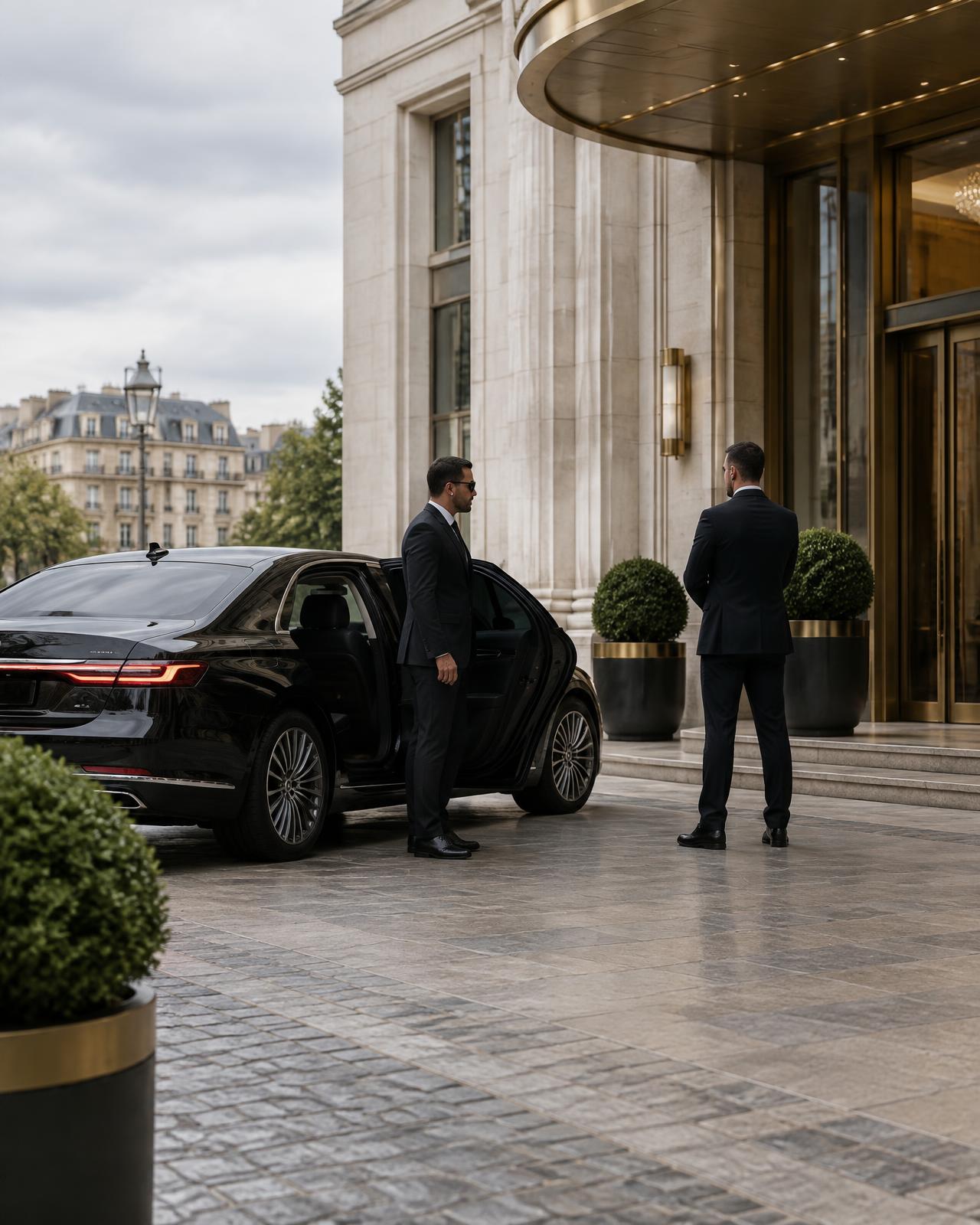
When a Mobility Programme involves executives, board members, delegations, or guests for whom specific Security Requirements have been defined, mobility and protection become interdependent components of the same programme.
In Secure Mobility programmes, complexity arises when the Security Requirements defined by specialists impact the structure and continuity of the Mobility Programme.
Agenda, movements, airports and FBOs, hospitality, venues, and operational facilities must remain consistent with the security framework defined by those responsible for protection.
Havermond structures and coordinates Protected Mobility Programmes through Mobility Advisory, Operational Coordination, and Operational Continuity.
The model can operate in conjunction with Corporate Security, Executive Protection Teams, Chief of Staff, Executive Office, Family Office, and Private Office, taking charge of the Mobility interdependencies included in the mandate.
Havermond does not define the security framework and does not assume responsibilities inherent to the structures tasked with protection.
It structures and coordinates Mobility so that it can operate consistently within this framework.
01

Protected Mobility becomes relevant when protection needs impact the structure of the Mobility Programme and, simultaneously, movement methods must remain compatible with the security programme.
Agenda, meetings, hospitality, airports, FBOs, and subsequent activities may require structured Mobility in relation to already defined Security Requirements.
Corporate events, institutional programmes, and high-visibility contexts may require coordination between Mobility, venues, access, and the structures responsible for Security.
When the agenda spans different cities, countries, or days, Mobility and Security must maintain continuity even as operational contacts change.
The coordination between FBO, Ground Transportation, hospitality, and destination activities may need to be integrated into the overall security framework.
When indicated by the professionals responsible for Security, the programme may require specific resource configurations, qualified operators, or particular vehicle characteristics.
02

When Mobility and Security are managed through independent structures, operational criticality can arise from the fragmentation of information and responsibilities.
The Havermond model introduces a level of coordination dedicated to interdependencies.
Agenda, Ground Transportation, airports, FBO, hospitality, and additional components are maintained within the same Mobility Program.
Corporate Security, Executive Protection, Mobility operators, aviation, hospitality, and other stakeholders do not need to be realigned directly by the client with every change.
Security structures retain responsibility for protection.
Operators retain responsibility for execution.
Havermond oversees the interdependencies of the Mobility component as defined by the mandate.
When the agenda or operational conditions change, the Mobility component can be realigned according to the already defined guidelines and responsibilities.

03
The security framework represents an input to the Mobility Program.
The guidelines formulated by Corporate Security, Executive Protection specialists, or other parties responsible for protection are considered in the construction of the Mobility components included in the mandate.
The model can be summarised as:
SECURITY REQUIREMENTS ↓ MOBILITY PROGRAM ↓ OPERATIONAL COORDINATION ↓ CONTINUITY OF EXECUTION
Havermond oversees the interfaces between these components within the perimeter defined by the mandate.
It does not independently determine the level of risk or the necessary protective measures.
It integrates the requirements defined by the competent parties into the Mobility Program and coordinates their operational consequences on the components included in the mandate.

04
Within the Havermond Method, the Protected Mobility Program is governed through safeguards dedicated to the operational context, the integration of Security Requirements, the coordination of Mobility components, and Operational Continuity.

05
The programme is analysed with respect to the agenda, geographies, stakeholders, responsibilities, and interdependencies between Mobility and Security.
Operational Context Mapping may consider:
programme structure and duration;
executive agenda;
locations involved;
airports and FBOs;
hospitality and venues;
Corporate Security already involved;
Executive Protection Team;
Mobility structures already defined;
Security Requirements communicated;
mutually dependent activities;
main liaison points.
The objective is to identify where Mobility interacts with the security framework and other operational components.
06

The requirements defined by the Security departments are incorporated into the relevant Mobility components.
This may concern, where applicable:
required characteristics of operators;
resource configuration;
coordination methods;
information management;
authorisation levels;
access procedures;
communication methods;
escalation;
specific requirements relating to Mobility resources.
When the security framework requires particular configurations, including armoured vehicles or additional asset features, Havermond can coordinate their integration through competent operators.
The measures derive from the security framework. Havermond governs their integration into the Mobility Program.
07

Protected Mobility can simultaneously involve:
Executive Office for agenda and priorities;
Corporate Security for governance and Security Requirements;
Executive Protection Team for specialist activities within their remit;
Ground Transportation operator for the execution of the ground component;
Private Aviation and FBO when integrated into the programme;
Hospitality and venue when impacting the Movement Plan.
Havermond maintains the liaison between these components to ensure that information, responsibilities, and activities remain consistent within the programme.
When stipulated by the mandate, the Mobility component can be brought under a Single Point of Coordination.
08

Protected Mobility becomes particularly sensitive when the programme evolves.
A change in the agenda can have consequences for:
Operational Continuity allows for the transfer of the change to the affected components and ensures the programme remains consistent with previously defined instructions.

09
When an Executive Protection Program is already active, Havermond can operate directly in conjunction with the appointed team.
The Executive Protection Team retains responsibility for assessments and specialist activities related to protection.
Havermond, on the other hand, maintains oversight of the Mobility components and their interdependencies.
This allows the security framework to be linked with:
The objective is not to create a parallel structure.
It is to enable existing expertise to operate within a coordinated and legible framework.
10

Protected Mobility can involve agendas, guest identities, locations, travel-related information, and other sensitive operational data.
The model can therefore incorporate specific rules regarding:
Not all stakeholders necessarily require the same level of information.
Information Governance ensures consistency between what needs to be shared, with whom, and at what stage of the programme.

11
CEOs, board members, entrepreneurs, and other executives may develop programs where Mobility, agenda, and Security Requirements must remain consistent across meetings, hotels, venues, airports, and FBOs.
Corporate events, large-scale events, and delegations may require coordination between the Guest Movement Program, venue, Corporate Security, and any Executive Protection Team.
Protected Mobility is integrated into the overall governance of the Mobility component.
Programs distributed across multiple cities or countries can integrate Ground Transportation, private aviation, FBOs, and different operational structures while maintaining continuity with the security framework.

12
Protected Mobility requires a clear distinction between protection, coordination, and execution.
Corporate Security and Executive Protection specialists retain responsibility for the assessment, planning, and management of protection.
Authorised Security providers and Executive Protection Teams carry out their assigned specialist activities.
Ground Transportation operators retain responsibility for vehicles, drivers, authorisations, and the execution of ground services.
Private Aviation operators retain their respective aeronautical responsibilities.
Havermond operates at the level of Strategic Advisory, Operational Coordination, and Operational Continuity applied to the Mobility components included in the Protected Mobility Program defined by the mandate.
The model thus allows for the distinct specialist competencies to be maintained while governing their interdependencies.
Protection, execution, and coordination remain distinct functions within the same programme.

13
Not every Mobility requirement necessitates a Protected model.
The preliminary assessment concerns the structure of the Mobility Program and its interdependencies with already defined Security Requirements, not the determination of the risk level or protective measures.
The analysis may consider:
Key Focus: Secure Mobility
SEO Title Secure Mobility & Protected Mobility Programs | Havermond
Meta Description Secure Mobility and Protected Mobility Programs for executives: Havermond coordinates Security Requirements, Ground Transportation, airports, FBOs, and Operational Continuity.